

ductwork installation guide pdf
Ductwork Installation Guide: A Comprehensive Overview
Planning is crucial for successful ductwork installation, determining duct height relative to finished floors for adequate clearances, as detailed in PDHonline Course M246.
This guide, alongside resources from Oneida Air and Precision Engineering, offers a comprehensive approach to fabrication and installation, ensuring efficient air delivery.

Planning & Preparation
Thorough planning is paramount before commencing any ductwork installation project. As highlighted in resources like the Oneida Air guide and PDHonline Course M246, a proactive approach minimizes unforeseen issues. Begin by formulating a detailed set of questions to guide the process and anticipate potential challenges.
Crucially, determine the height of the ductwork’s lowest point in relation to the finished floor to ensure adequate clearances, a practice emphasized by industry standards. This measurement is vital when layout is critical. Consider the placement of ductwork, prioritizing conditioned spaces to maximize efficiency. If unconditioned spaces are unavoidable, meticulous sealing and insulation are essential to prevent energy loss and maintain optimal system performance.
Understanding Ductwork Components
A successful installation hinges on comprehending the core elements of a ductwork system. The plenum, as described in referenced materials, serves as the central air chamber, receiving conditioned air directly from the furnace – representing the system’s initial stage.
From the plenum, air travels through main line ductwork, forming the primary airflow path connecting to the dust collector or air handler. Drop ductwork then branches off, delivering air to individual tools or registers. Understanding the assembly of these components – main lines and drops – is vital. Furthermore, recognizing elements like register boots, duct reducers, and their connections (end, takeoff) is crucial for a complete system understanding.
Plenum: The Central Air Chamber
The plenum is fundamentally the central collecting chamber for conditioned, fresh air as it exits the furnace, marking the very first stage of the entire ductwork system. Its role is critical in distributing airflow efficiently throughout the building. Proper plenum design and installation are paramount for optimal HVAC performance.
Understanding its function allows for informed decisions regarding size and placement. While specific dimensions aren’t detailed in the provided excerpts, the plenum’s importance as the initial distribution point is consistently emphasized. Careful consideration during installation ensures balanced airflow and minimizes system strain, contributing to overall energy efficiency and comfort.
Main Line Ductwork Assembly
The main line ductwork represents the primary pathway for airflow, directly connecting to the dust collector or HVAC unit. As highlighted by Oneida Air’s guide, assembling this component correctly is vital for system effectiveness. This involves carefully joining sections to create a continuous, sealed conduit for air transport.
Proper assembly techniques, utilizing nuts and set screws fitted into corner holes (Precision Engineering), are essential to prevent leaks and maintain consistent pressure. Addressing any burrs or sharp edges created during fabrication is also crucial for smooth airflow and longevity. A well-assembled main line ensures efficient distribution throughout the system.
Drop Ductwork Assembly
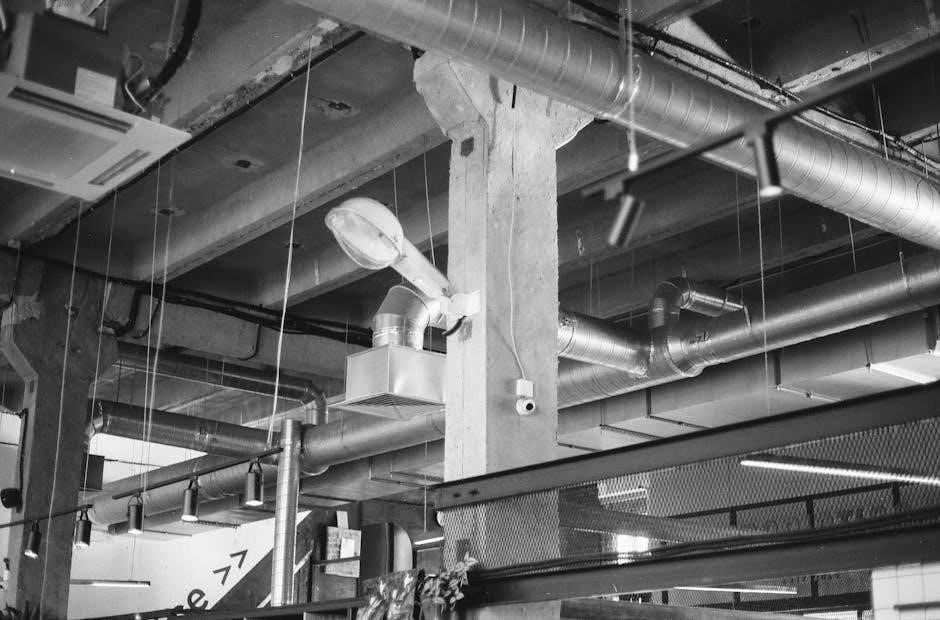
Drop ductwork functions as the branching network, connecting the main line to individual tools or registers. Oneida Air’s installation guide emphasizes the importance of correctly assembling these “drops” to ensure adequate airflow to each connection point. This requires precise fitting and secure joining techniques, mirroring the care taken with the main line.
Similar to main line assembly, utilizing nuts and set screws (Precision Engineering) is key for a robust and airtight seal. Attention to detail, including deburring any sharp edges, prevents airflow restriction and potential damage. Properly assembled drops contribute significantly to overall system efficiency and performance.
Ductwork Materials & Selection
Choosing the right materials is fundamental to a successful and long-lasting ductwork system. While the provided resources don’t explicitly detail material types, the emphasis on sealing and insulation (Xcel Ductwork Fabrication/Installation) implies a need for materials compatible with these processes;
Considerations include airflow requirements, budget, and environmental factors. Materials must withstand temperature fluctuations and resist corrosion. Proper selection directly impacts air quality and energy efficiency; Furthermore, the guide stresses planning, which extends to material quantity estimation to minimize waste and ensure a complete installation.
Essential Tools for Ductwork Installation

While a specific tool list isn’t provided in the referenced materials, the focus on assembly with nuts and set screws (Precision Engineering) indicates the need for wrenches and screwdrivers. Addressing burrs and sharp edges necessitates deburring tools or sandpaper.
Sealing and insulating ductwork requires appropriate adhesives, sealants, and insulation application tools. Measuring tools are vital for accurate layout and fabrication. Given the importance of planning (Oneida Air, PDHonline), having a comprehensive toolkit prepared beforehand streamlines the installation process and minimizes delays. Safety gear is also essential.
Ductwork Fabrication Techniques
Key to successful installation is proper ductwork assembly, specifically utilizing nuts and set screws fitted into corner holes (Precision Engineering). This method ensures secure connections throughout the system. Attention to detail is paramount; any burrs created during cutting or fabrication must be addressed to prevent damage and maintain airflow efficiency.
The materials emphasize the importance of careful construction. While not explicitly detailed, techniques would involve precise cutting, fitting, and fastening of ductwork sections. Proper sealing is crucial, especially when ductwork isn’t within conditioned space (PDHonline), requiring skilled application of appropriate sealants.
Assembling Ductwork with Nuts and Set Screws

Precision Engineering highlights the core technique: assembling ductwork using nuts and set screws inserted into corner holes. This method provides a robust and reliable mechanical connection, crucial for maintaining system integrity and preventing air leaks. The process demands accuracy, ensuring screws are properly tightened without overstressing the duct material.
This approach is fundamental to fabrication, offering a secure alternative to welding or adhesives. It allows for disassembly if adjustments or repairs are needed. Careful attention to alignment is vital during assembly, guaranteeing a smooth, uninterrupted airflow path throughout the ductwork system.
Addressing Burrs and Sharp Edges
Precision Engineering emphasizes the importance of addressing burrs created during ductwork fabrication. These imperfections, if left unattended, can impede airflow and potentially damage flexible duct connections. Thorough deburring is essential, ensuring smooth transitions and minimizing resistance within the system.
Sharp edges pose a safety hazard during installation and maintenance. Careful filing or sanding is required to eliminate these risks, protecting installers and future service personnel. Addressing these details contributes to a professional finish and long-term system reliability, preventing potential issues down the line.
Ductwork Layout Considerations
Strategic ductwork placement is paramount for optimal HVAC system performance. PDHonline’s M246 course highlights prioritizing location within conditioned spaces – avoiding unconditioned areas like attics, crawlspaces, and garages. When conditioned space isn’t feasible, proper sealing and insulation become critical to minimize energy loss.
Furthermore, maintaining adequate clearances around ductwork is essential, necessitating pre-planning to determine the lowest duct feature’s height relative to the finished floor. Careful consideration of these factors ensures efficient air delivery, occupant comfort, and improved indoor air quality.
Maintaining Adequate Clearances
Determining sufficient clearance for ductwork is a foundational aspect of installation, as emphasized by PDHonline’s M246 course. It’s standard practice to establish the height of the duct’s lowest point in relation to the finished floor before ceiling installation.
This proactive measurement is particularly critical when clearances are a defining factor in the overall layout. Accurate planning prevents future obstructions and ensures unimpeded access for maintenance. Prioritizing these clearances contributes to efficient airflow and long-term system reliability, avoiding potential issues down the line.
Optimal Ductwork Placement (Conditioned vs. Unconditioned Space)

Strategic ductwork placement significantly impacts HVAC system efficiency. PDHonline’s M246 course highlights the preference for locating ductwork within conditioned spaces – areas consistently maintained at desired temperatures. This minimizes energy loss and maximizes comfort.
However, when placement in conditioned space isn’t feasible, proper sealing and insulation become paramount. Avoid running ducts through exterior walls, garages, crawlspaces, or attics without thorough protection. Prioritizing these measures mitigates heat gain or loss, ensuring optimal system performance and reduced energy consumption.
Sealing and Insulating Ductwork
Effective sealing and insulation are critical for maximizing HVAC system efficiency and indoor air quality. As emphasized in resources like PDHonline’s M246 course, minimizing air leakage is paramount. Thoroughly seal all ductwork joints and seams to prevent conditioned air from escaping into unconditioned spaces.
Furthermore, adequate insulation reduces heat transfer, maintaining consistent temperatures and lowering energy bills. Utilize appropriate fibrous glass HVAC duct insulation products, as referenced in various guides, to ensure optimal thermal performance and prevent condensation. Proper sealing and insulation work hand-in-hand for a comfortable and efficient system.
Register Boot Installation
Register boot installation requires precision to ensure proper airflow distribution. Resources, such as those detailing ductwork from Oneida Air, highlight the importance of correctly connecting boots to both the ductwork and the register. Specifically, 90º angle boots, like right-hand configurations, demand careful alignment for optimal performance.
Securely attach the boot end and takeoff connections, ensuring a tight seal to prevent air leakage. Proper installation minimizes airflow resistance and maximizes comfort. Attention to detail during this phase is crucial for a balanced and efficient HVAC system, contributing to overall occupant comfort.
90º Angle Boot Installation (Right Hand)
Right-hand 90º angle boot installation demands precise alignment within the ductwork system. These boots, as referenced in ductwork guides, direct airflow at a specific angle, necessitating correct orientation during installation. Ensure the boot’s curve smoothly transitions with the connecting duct, minimizing airflow disruption.

Secure the boot using appropriate fasteners, guaranteeing a robust and airtight connection. Improper installation can lead to reduced efficiency and increased noise. Careful attention to detail during this step is vital for optimal system performance and consistent temperature distribution throughout the conditioned space.
Boot End and Takeoff Connections
Establishing secure boot end and takeoff connections is paramount for efficient airflow. These connections, vital components of the ductwork system, must be airtight to prevent energy loss and maintain system integrity. Utilize appropriate sealing methods, such as mastic or foil tape, to eliminate gaps and leaks.
Properly fastened connections ensure consistent air delivery to registers. Refer to installation guides for recommended fastener types and spacing. Inspect each connection thoroughly after completion, verifying a robust and leak-free seal. A well-executed connection contributes significantly to overall HVAC system performance and occupant comfort.
Duct Reducer Installation

Duct reducers facilitate transitions between different duct sizes, optimizing airflow and system efficiency. Careful installation is crucial to minimize turbulence and pressure drop. Ensure reducers are installed with the wider end facing the airflow source, promoting smooth air movement.
Securely fasten reducers using appropriate methods, like nuts and set screws, ensuring a tight seal to prevent leaks. Inspect for burrs or sharp edges that could obstruct airflow and address them promptly. Proper reducer placement and secure connections contribute to balanced air distribution and overall HVAC system performance.
Ductwork Support & Hanging
Proper ductwork support is essential for preventing sagging, noise, and potential damage. Utilize appropriate hangers and supports spaced according to duct size and weight, ensuring stability throughout the system. Securely attach supports to building structural members, like joists, using approved fasteners.
Maintain adequate clearances around ductwork, avoiding obstructions and allowing for future maintenance access. Consider thermal expansion and contraction when installing supports, allowing for movement without stressing the ductwork. Robust support systems contribute to long-term system reliability and efficient airflow.

Common Installation Issues & FAQs
Frequently encountered issues include leaks at joints, insufficient sealing, and inadequate support leading to sagging. Addressing burrs and sharp edges during fabrication, as highlighted by Precision Engineering, is crucial for preventing damage and ensuring airtight connections.
Common questions revolve around proper sealing techniques, optimal insulation thickness, and resolving airflow imbalances. Thorough planning, as emphasized in various guides, minimizes unforeseen problems. Regularly inspect connections and address any concerns promptly to maintain system efficiency and indoor air quality.
Ensuring Efficient Air Delivery
Efficient air delivery hinges on a properly designed and installed ductwork system. Maintaining adequate clearances, as detailed in PDHonline Course M246, prevents airflow restriction. Optimal ductwork placement within conditioned spaces minimizes energy loss, while proper sealing and insulation are paramount when unconditioned spaces are unavoidable.
Regular inspection for leaks and obstructions is vital. Correctly assembled ductwork, utilizing nuts and set screws as recommended by Precision Engineering, guarantees airtight connections. Prioritizing these steps maximizes system performance, occupant comfort, and overall energy efficiency.
Improving Indoor Air Quality Through Ductwork
Ductwork significantly impacts indoor air quality. Proper sealing, a key focus in resources like the Oneida Air guide, prevents dust, allergens, and pollutants from circulating throughout a building. Utilizing appropriate fibrous glass HVAC duct insulation, as referenced in various guides, further minimizes contamination.
Regular duct cleaning and maintenance are essential. Addressing burrs and sharp edges during installation, as highlighted by Precision Engineering, prevents particle buildup. A well-maintained system, coupled with efficient air delivery, contributes to a healthier and more comfortable indoor environment for occupants.

Ductwork Insulation Guide
Effective ductwork insulation is paramount for energy efficiency and preventing condensation; Resources emphasize utilizing fibrous glass HVAC duct insulation products, ensuring proper coverage and sealing to minimize heat loss or gain. Insulation is especially critical when ductwork resides in unconditioned spaces like attics or crawlspaces, as noted in PDHonline Course M246.
Proper installation prevents air leakage and maintains consistent temperatures. The guide stresses the importance of sealing all joints and seams before insulating. Selecting the correct R-value for your climate zone is also crucial for optimal performance and reduced energy consumption, contributing to occupant comfort.
Gasket Reference Numbers
Gasket selection is vital for airtight ductwork connections, preventing energy loss and maintaining system efficiency. While specific reference numbers aren’t explicitly detailed in the provided excerpts, the importance of proper sealing is consistently emphasized. Precision Engineering highlights the need to ensure any fixing method doesn’t compromise the seal, implying gasket usage is integral.
Refer to manufacturer specifications for appropriate gasket numbers corresponding to duct sizes and materials. A secure connection, achieved with correctly fitted gaskets, is fundamental to efficient air delivery and improved indoor air quality. Detailed gasket information is typically found within comprehensive ductwork installation PDFs.
Safety Precautions During Installation
Prioritize safety throughout the ductwork installation process. The provided excerpts don’t detail specific precautions, but emphasize careful fabrication. Addressing burrs and sharp edges, as noted by Precision Engineering, is a crucial safety step to prevent injuries during handling and installation.
Always wear appropriate personal protective equipment (PPE), including gloves, safety glasses, and a dust mask. Follow manufacturer guidelines for tools and materials. Ensure the work area is well-lit and free of obstructions. Comprehensive ductwork installation PDFs will typically include a dedicated safety section outlining potential hazards and preventative measures.